
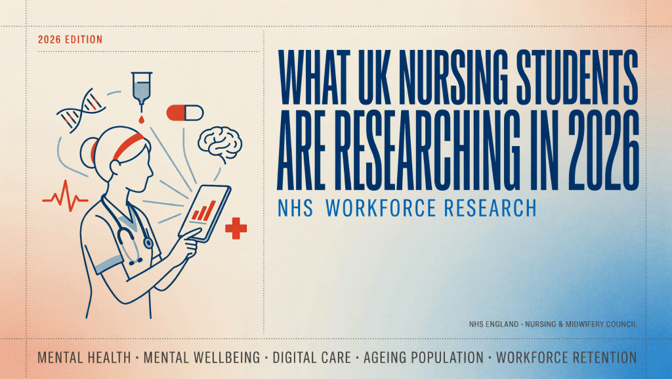
If you’re a nursing student trying to pick a dissertation topic or research assignment this year, there’s a strong chance NHS workforce research keeps coming up and for good reason. Staffing shortages, retention pressures, and workforce planning have become some of the most searched, most assessable, and most genuinely important topics in UK nursing education right now.
This guide walks through why NHS workforce research is dominating nursing coursework in 2026, the specific themes students are exploring, a full list of dissertation and assignment topic ideas across mental health, adult, and general nursing, how to structure a workforce-focused research assignment so it meets marking criteria, and where to turn for genuine academic support if you’re stuck.
Whether you need a starting topic on staffing shortages, burnout, student wellbeing, international recruitment or skill mix, we can help you sharpen one you’ve already chosen, help you find a clear, practical path here.
NHS Workforce Research: Why It’s the Topic Nursing Students Can’t Avoid Right Now
NHS workforce research has become one of the most consistently assigned and self-selected topics across UK nursing programmes, and it’s not simply because it’s trending, it’s because workforce pressures are directly shaping the clinical environment students are training and working within.
Understanding staffing models, retention challenges, and workforce planning isn’t an abstract policy exercise for nursing students; it’s tied directly to placement experiences, patient safety outcomes, and the working conditions graduates are stepping into.
From a purely academic standpoint, NHS workforce research also tends to score well because it sits at the intersection of several assessment priorities nursing programmes care about: evidence-based practice, health policy awareness, and the ability to connect theory to real clinical and organisational context, exactly the kind of critical, applied thinking markers are looking for.
The State of the NHS Workforce in 2026: What Students Need to Know
Before diving into a specific research angle, it helps to have a grounded sense of the broader workforce context most assignments will expect you to reference:
| Workforce Issue | What It Involves |
| Staffing shortages | Persistent vacancy rates in nursing roles, particularly in mental health, community, and adult social care settings |
| Long Term Workforce Plan | NHS England’s strategic plan (published 2023) aiming to significantly expand nurse training places and apprenticeship routes over the coming decade |
| International recruitment | Continued reliance on internationally trained nurses to fill domestic workforce gaps, alongside ethical recruitment debates |
| Retention and burnout | High attrition among early-career nurses, linked to workload, moral distress, and work-life balance pressures |
| Skill mix changes | Growing use of nursing associates and support workers alongside registered nurses to manage capacity pressures |
The NHS Long Term Workforce Plan remains the key policy document underpinning most current workforce research and is worth citing directly if your assignment touches on planning or projected training numbers, just make sure to check for any updates or revisions since its original publication, as workforce plans are periodically reviewed.
NHS Staffing Shortage Research: Key Themes Students Are Exploring
Staffing shortages remain the single most searched and most assigned workforce topic, but strong research goes beyond simply stating that shortages exist. Common angles include:
- Regional variation in shortages – Comparing staffing pressures in rural versus urban NHS trusts, or across UK nations
- Specialty-specific shortages – Mental health nursing, learning disability nursing, and community nursing often face more acute shortages than general adult nursing
- Causes versus symptoms – Distinguishing structural causes (funding, training capacity) from visible symptoms (agency staff reliance, overtime pressure)
- Impact on patient safety and care quality – Linking staffing ratios to documented outcomes, a well-established and citable area of nursing research
- Policy responses and their effectiveness – Critically evaluating whether current workforce plans are likely to close existing gaps
The Royal College of Nursing (RCN) publishes regular staffing-level reports and workforce surveys that are excellent primary sources for this kind of assignment, since they combine frontline survey data with policy analysis specifically relevant to UK nursing practice.
Healthcare Workforce Challenges UK: Beyond the Headline Numbers
Vacancy statistics tell only part of the story, and markers consistently reward students who dig into the underlying dynamics rather than restating shortage figures. Deeper healthcare workforce challenges worth exploring include:
| Challenge | Research Angle |
| Ethical international recruitment | Balancing NHS staffing needs against the ethical implications for source countries’ own healthcare systems |
| Workforce ageing | The impact of an ageing nursing workforce nearing retirement on future capacity planning |
| Digital and technological change | How new technology and AI-assisted tools are reshaping nursing roles and required skill sets |
| Regional inequality | Disparities in staffing and resourcing between NHS trusts in different parts of the UK |
| Post-pandemic workforce recovery | Longer-term effects of pandemic-era pressures on nurse retention and career intentions |
Independent health policy bodies like the Nuffield Trust and The King’s Fund both publish detailed, regularly updated workforce analysis that goes well beyond government figures — both are strong, citable sources if you want your research to stand out with genuinely current, independent evidence rather than relying solely on NHS or government sources.
Nursing Student Wellbeing Research: A Growing Focus in Its Own Right
Alongside broader workforce research, nursing student wellbeing has become a significant and increasingly assigned research area on its own, partly because student experience is now recognised as directly predictive of future workforce retention. Common research angles include:
- The psychological impact of clinical placements on nursing students
- Financial pressures and their effect on student attrition from nursing programmes
- Support systems (mentorship, pastoral care) and their impact on student wellbeing and completion rates
- The relationship between student wellbeing during training and long-term career intentions within the NHS
This is a genuinely rich area for a dissertation because it combines primary research potential (surveys, interviews with fellow students) with strong policy relevance, since universities and NHS trusts are actively investing in student support initiatives right now.

Nursing Dissertation Topics UK: NHS Workforce Edition
If you need a specific, well-scoped topic rather than a broad theme, here are strong starting points across different nursing specialisms:
Adult and General Nursing:
- The impact of nurse-to-patient ratios on care quality in NHS acute settings
- Evaluating the effectiveness of the NHS Long Term Workforce Plan on addressing adult nursing shortages
- Retention strategies for early-career nurses in NHS acute trusts
Mental Health Nursing:
- Staffing shortages and their impact on care quality in Mental Health Nursing services
- The role of skill mix changes in addressing mental health nursing workforce gaps
- Burnout and moral distress among Mental Health Nursing staff in inpatient settings
Community and Public Health Nursing:
- Workforce capacity challenges in community nursing amid rising demand for home-based care
- The impact of district nursing shortages on hospital discharge delays
Learning Disability Nursing:
- Addressing chronic shortages in learning disability nursing through targeted recruitment strategies
- The impact of workforce gaps on care quality for adults with learning disabilities
Cross-Cutting Workforce Themes:
- Ethical considerations in international nurse recruitment to the UK
- The relationship between nursing student wellbeing and long-term NHS retention
- Comparing regional NHS workforce shortages across England, Scotland, Wales, and Northern Ireland
Nursing Research Topics 2026: Beyond Workforce
If your programme allows a broader research focus, workforce sits alongside several other high-interest nursing research areas this year, including digital health adoption in clinical practice, the expanding role of nursing associates, patient safety culture post-pandemic, and health inequalities in access to NHS services.
Many of these connect back to workforce themes naturally, so it’s worth considering how your chosen topic might intersect with staffing or capacity pressures even if workforce isn’t your primary focus.
How to Structure an NHS Workforce Research Assignment or Dissertation
- Narrow your topic early – “NHS workforce shortages” is too broad; narrow to a specific specialism, region, or angle (e.g., mental health nursing retention in a specific NHS region).
- Ground your introduction in current context – Reference the Long Term Workforce Plan or recent RCN/Nuffield Trust data to establish why your topic matters now.
- Build a clear literature review – Combine policy documents, peer-reviewed nursing journals, and independent think tank analysis (Nuffield Trust, King’s Fund) for a well-rounded evidence base.
- Choose an appropriate methodology – Workforce topics often suit either a literature-based critical review or, for primary research, a survey/interview design with current nursing students or staff.
- Critically evaluate, don’t just describe – Strong dissertations assess whether current policy responses are likely to actually work, not just summarise what they say.
- Link findings back to practice implications – Nursing markers consistently reward research that connects back to patient care quality and professional practice, not policy in isolation.
- Reference consistently throughout – Use your university’s required referencing style precisely, particularly for NHS and government policy documents which can be tricky to cite correctly.
If you’re structuring a full dissertation rather than a shorter assignment, our dissertations service is built specifically around this kind of longer, evidence-heavy academic work, from methodology design through to final structure.
NHS Nursing Assignment Help: Where to Turn When You’re Stuck
Workforce research assignments can be genuinely difficult to scope well, especially when balancing clinical placements alongside coursework deadlines. If you need dedicated NHS nursing assignment help, our nursing service supports UK nursing students specifically with topic selection, structure, and evidence-based academic writing across adult, mental health, and community nursing modules.
For students earlier in the process who need help getting a first draft moving, our assignment writing service supports the full range of academic tasks nursing students juggle alongside clinical hours, and our nursing thesis writing help and dissertation support extends into full-length research projects for students further along in their programme.
If you’re studying with Kaplan specifically, our kaplan assignment writing help guide covers provider-specific expectations that are worth checking alongside your subject-specific research.
As one of the more established names UK students turn to for assignment help UK-wide, we regularly support nursing students specifically because workforce and clinical topics require both academic rigour and genuine subject familiarity, not generic essay-writing support.
Whether you’re after assignment writing help for a single module or online assignment help across a full academic year, the goal is the same: helping you produce work that reflects your own understanding, backed by credible, well-referenced evidence.
Frequently Asked Questions
What is NHS workforce research?
Its academic research focused on NHS staffing levels, recruitment, retention, and workforce planning, a major and growing area of study within UK nursing programmes.
Why is NHS workforce research such a popular dissertation topic?
It combines strong policy relevance, extensive publicly available data (from RCN, Nuffield Trust, King’s Fund, and NHS England), and direct connection to students’ own clinical placement experiences, making it both researchable and personally relevant.
What are good nursing dissertation topics related to NHS workforce issues?
Strong options include nurse-to-patient ratios and care quality, retention strategies for early-career nurses, ethical considerations in international recruitment, and workforce shortages within specific specialisms like mental health or learning disability nursing.
Where can I find reliable data on NHS staffing shortages?
The Royal College of Nursing, the Nuffield Trust, The King’s Fund, and NHS England’s own Long Term Workforce Plan are all strong, citable sources for current UK workforce data.
Is nursing student wellbeing a good research topic?
Yes. It’s an increasingly recognised and well-supported research area, particularly because student wellbeing is now understood to directly influence long-term NHS workforce retention.
How do I reference the NHS Long Term Workforce Plan in my assignment?
Cite it as an organisational/government publication in your required referencing style (commonly Harvard for most UK nursing programmes), including the publishing body, year, and full title.
What’s the difference between NHS workforce research and general healthcare workforce research?
NHS workforce research specifically focuses on the UK’s National Health Service context, while healthcare workforce research more broadly can include private healthcare, social care, or international comparisons.
Can I get help with an NHS-focused nursing dissertation?
Yes. Dedicated academic support services, including subject-specific nursing assignment help, can support topic selection, structure, and evidence-based writing for NHS workforce dissertations and assignments.
What research methods work best for NHS workforce dissertations?
Both literature-based critical reviews and primary research (surveys or interviews with nursing students or staff) work well, depending on your programme’s requirements and your access to participants.
How current does my evidence need to be for a 2026 workforce research assignment?
Prioritise sources published within the last three to five years where possible, and always check for the most recent version of key policy documents like the NHS Long Term Workforce Plan, as workforce data and plans are updated periodically.
Turning Workforce Pressure Into a Strong Piece of Research
NHS workforce research is one of the clearest ways nursing students can connect academic work to the profession they’re training to join, and markers consistently respond well to that genuine relevance.
The strongest submissions narrow their focus early, lean on credible, current sources like the RCN, Nuffield Trust, and NHS England directly, and connect workforce data back to real practice and patient care implications rather than treating it as abstract policy.
If you’d like support shaping your topic, structuring your research, or polishing a full dissertation, visit Assignment Helper UK to see how our nursing-specialist team can help you turn workforce pressure into one of your strongest pieces of academic work.